
relaiable vs. Classic Testing Tools: The Difference at a Glance
Five points where teams lose the most time in test automation, and how AI-driven testing solves them. A comparison for a quick overview.
- testautomation
- qa
- ai
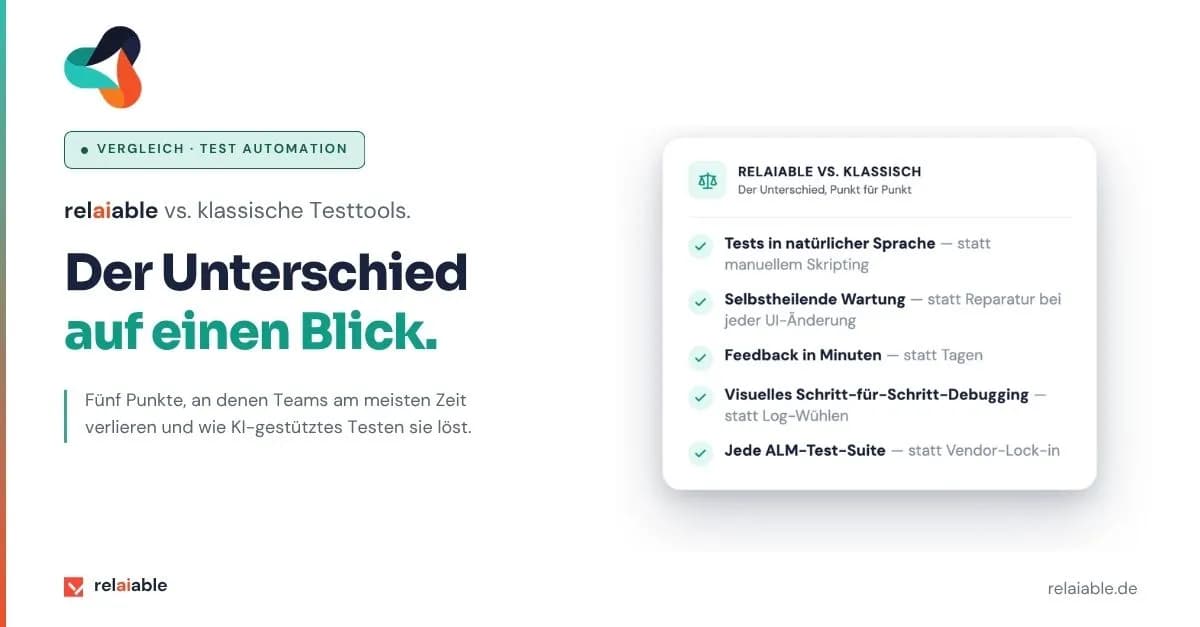
Classic testing tools and AI-driven testing feel very different in day-to-day work. But what exactly causes that? We've put together the five points where modern teams lose the most time, and set out how AI-driven testing solves each one. First, the difference at a glance:
| Area | Classic testing tools | relaiable |
|---|---|---|
| Test creation | Manual scripting | Natural language |
| Maintenance | Repair on every UI change | Self-healing |
| Feedback | Days | Minutes |
| Debugging | Digging through logs | Visual, step by step |
| Flexibility | Vendor lock-in | Any ALM test suite |
Behind every row sits a concrete everyday experience. Here are the five points in a little more detail.
1. Test creation: natural language instead of scripts
With classic tools, someone writes every test case as a script, usually by hand and usually from the development team. With relaiable you describe tests in natural language. That way anyone on the team can contribute to automation, not only those who can code.
2. Maintenance: self-healing instead of constant repair
Classic UI tests hang on fixed selectors and break with every small interface change. relaiable recognises elements by several characteristics and adapts tests automatically. Weekly repair work turns into a test that heals itself.
3. Feedback: minutes instead of days
If feedback from a test run only arrives after days, it loses its value. Short, reliable feedback cycles keep development moving, because problems surface while the context is still fresh.
4. Debugging: visual instead of digging through logs
With classic tools, a failed test often means hours of searching through logs. relaiable shows visually and step by step where and why a test fails. Failure analysis shrinks from hours to minutes.
5. Flexibility: any ALM suite instead of lock-in
Many tools tie you to their own ecosystem. relaiable works with any ALM test suite and fits into your existing toolchain, rather than pushing you into a vendor lock-in.
Where's the first step worth taking?
Which of these five points costs you the most nerves right now? Usually it's the one with the biggest lever, and that's where the first step is worth taking. You don't have to change everything at once to feel the difference.